01
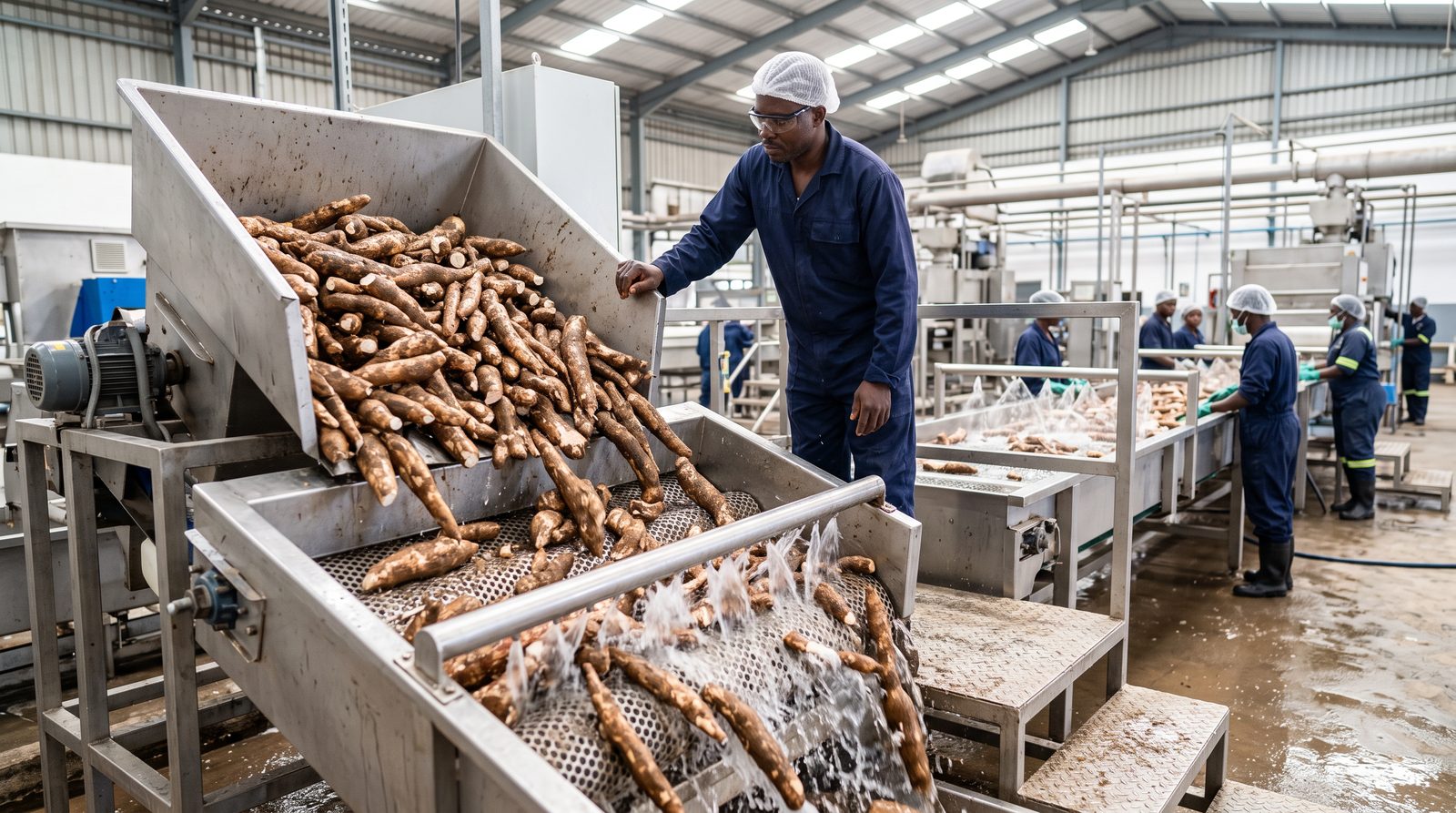
Reception & washing
Fresh intake
Within 24 hours of harvest
Roots are weighed, dry-cleaned, and passed through paddle washers that strip away sand, stones, and peel fragments before a single root is processed.
A 30-tonne-per-day cassava-to-starch plant in the Sandiara Special Economic Zone, Thiès Region — engineered from field to bag around one principle: move fast, waste nothing, prove every step.
On the A1/RN1 corridor, 45 minutes from Blaise Diagne International Airport and 90 minutes from the Port of Dakar, within 60 km of the cassava belt (Tivaouane, Thiès, Fatick). SEZ status brings investment incentives and streamlined customs for imported equipment.
A 500-hectare mechanized nucleus farm (30% of supply) plus 2,000+ smallholder outgrowers within 50 km (70%), with guaranteed floor prices and input support. Denzel’s own fleet moves roots farm-to-factory within 24 hours. A 100-hectare paid pilot season must prove reliable volumes and quality before the plant scales.
An offtake pipeline led by Grands Moulins de Dakar (anchor letter of intent), with Patisen, SOBOA, SEDIMA Group, and regional pharmaceutical buyers — and the balance exported across UEMOA and ECOWAS through the Port of Dakar under AfCFTA.
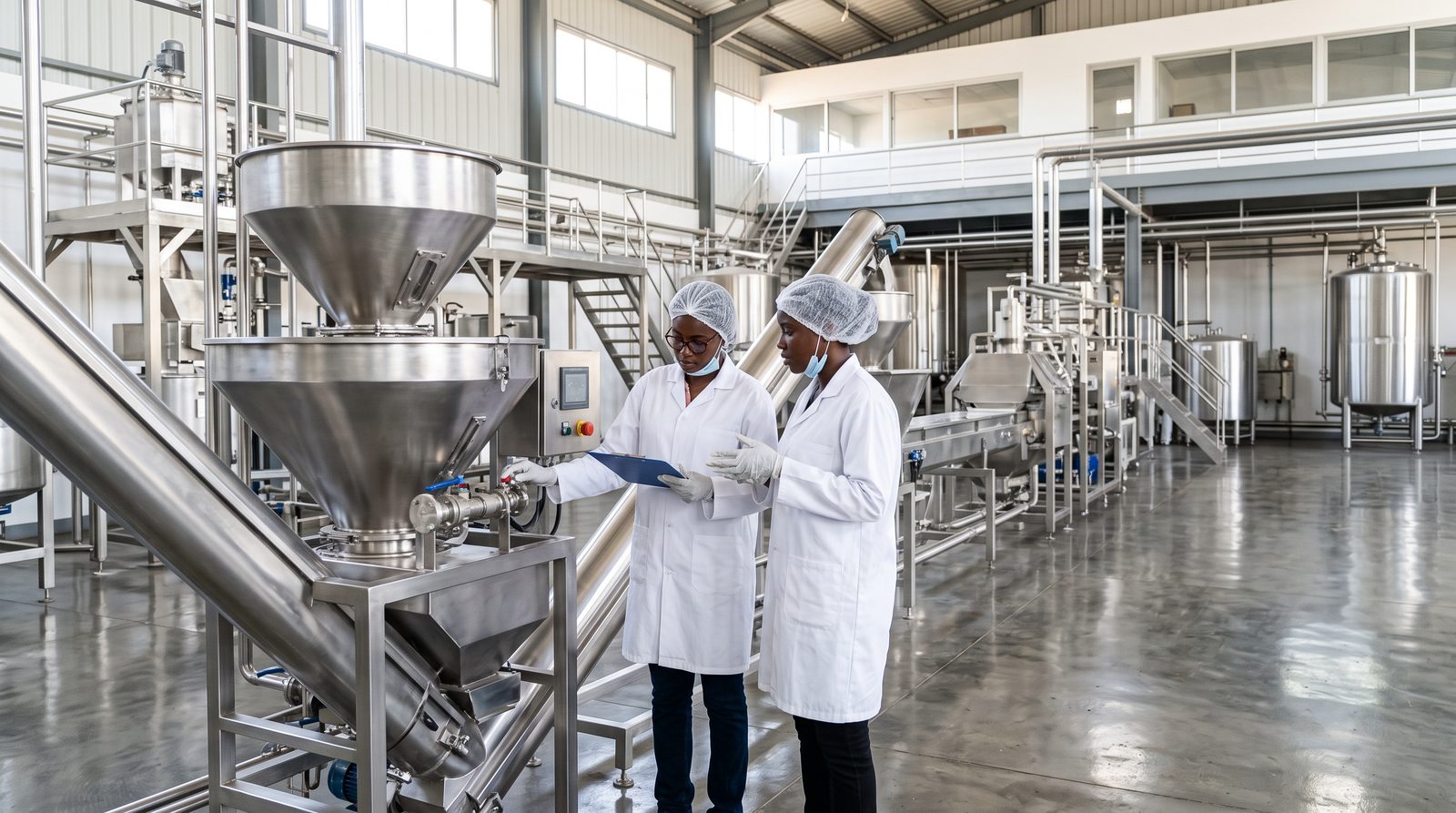
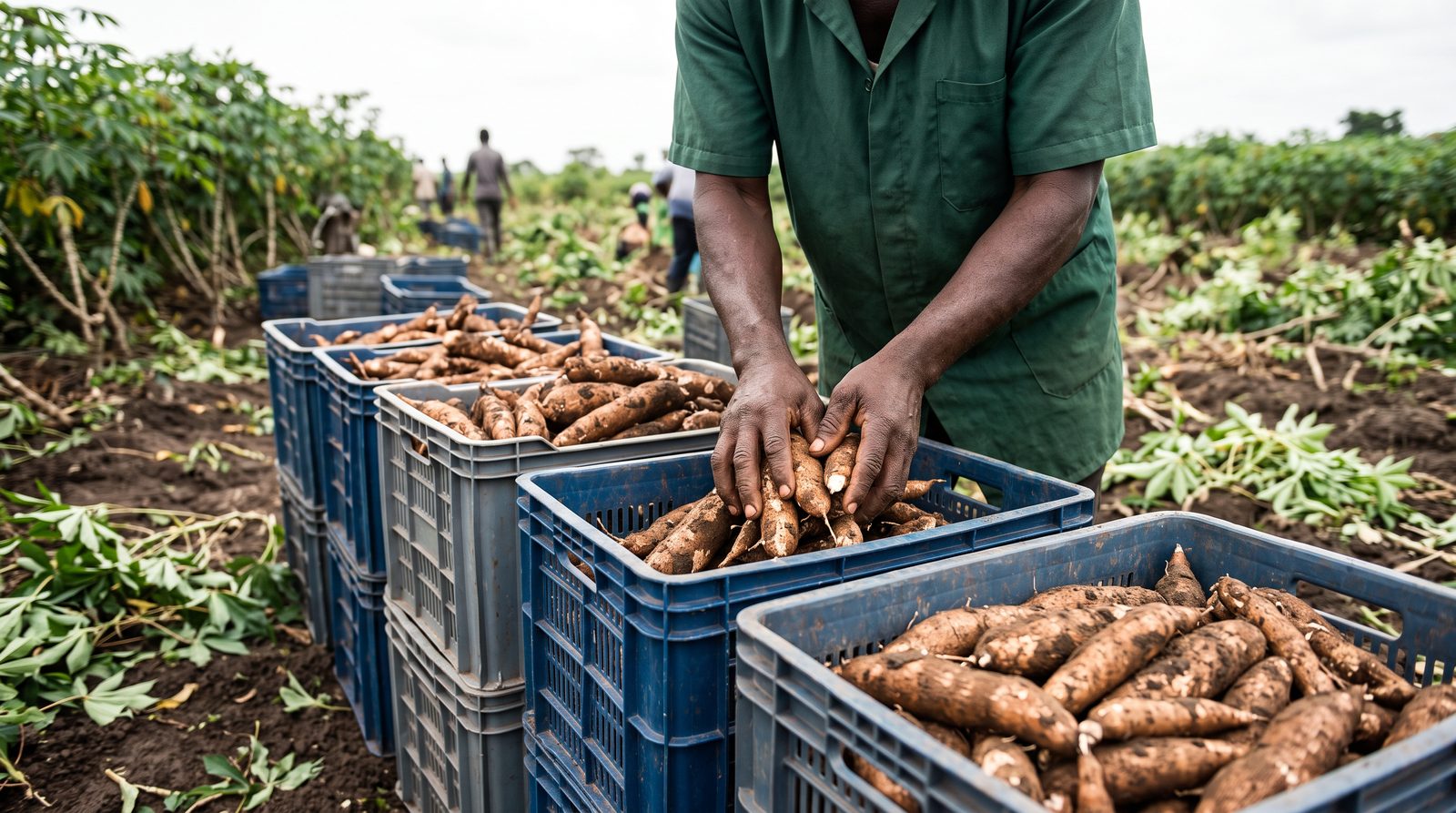
Concept imagery · The 30 t/day starch hall & farm-to-factory root supply within 24 hours
Full technical, commercial, and financial detail is set out in the business plan, available on request under NDA.
A continuous line turns perishable roots into a stable industrial commodity within hours of arrival — nothing is wasted, and every stage is monitored.
Roots are weighed, dry-cleaned, and passed through paddle washers that strip away sand, stones, and peel fragments before a single root is processed.
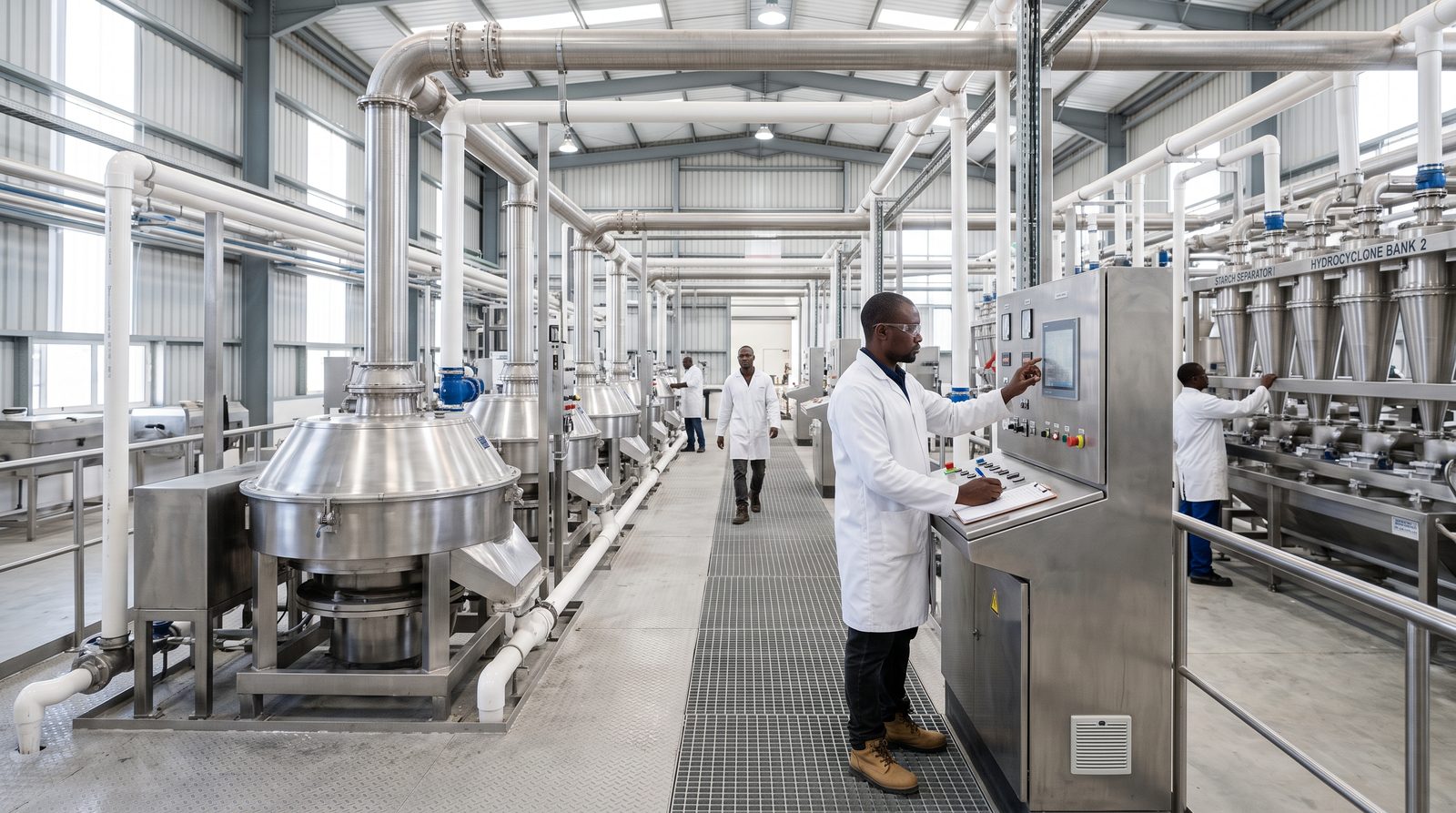
High-speed raspers open the root cells; extractors wash the starch out of the fibre, and hydrocyclone banks refine the starch milk to food-grade purity.
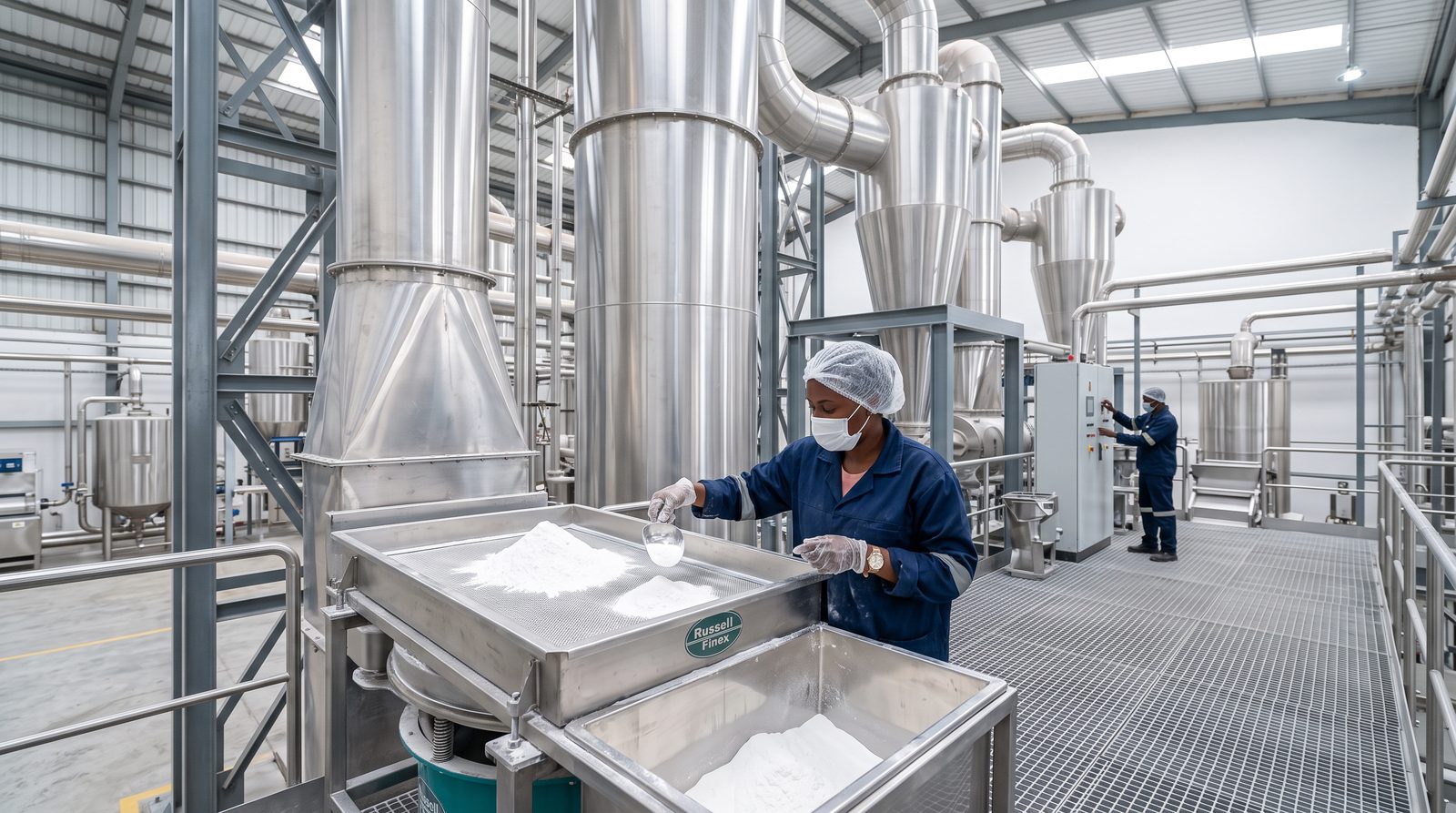
The refined starch milk is dewatered and flash-dried in a stream of hot air — seconds, not hours — locking in whiteness, viscosity, and shelf stability.
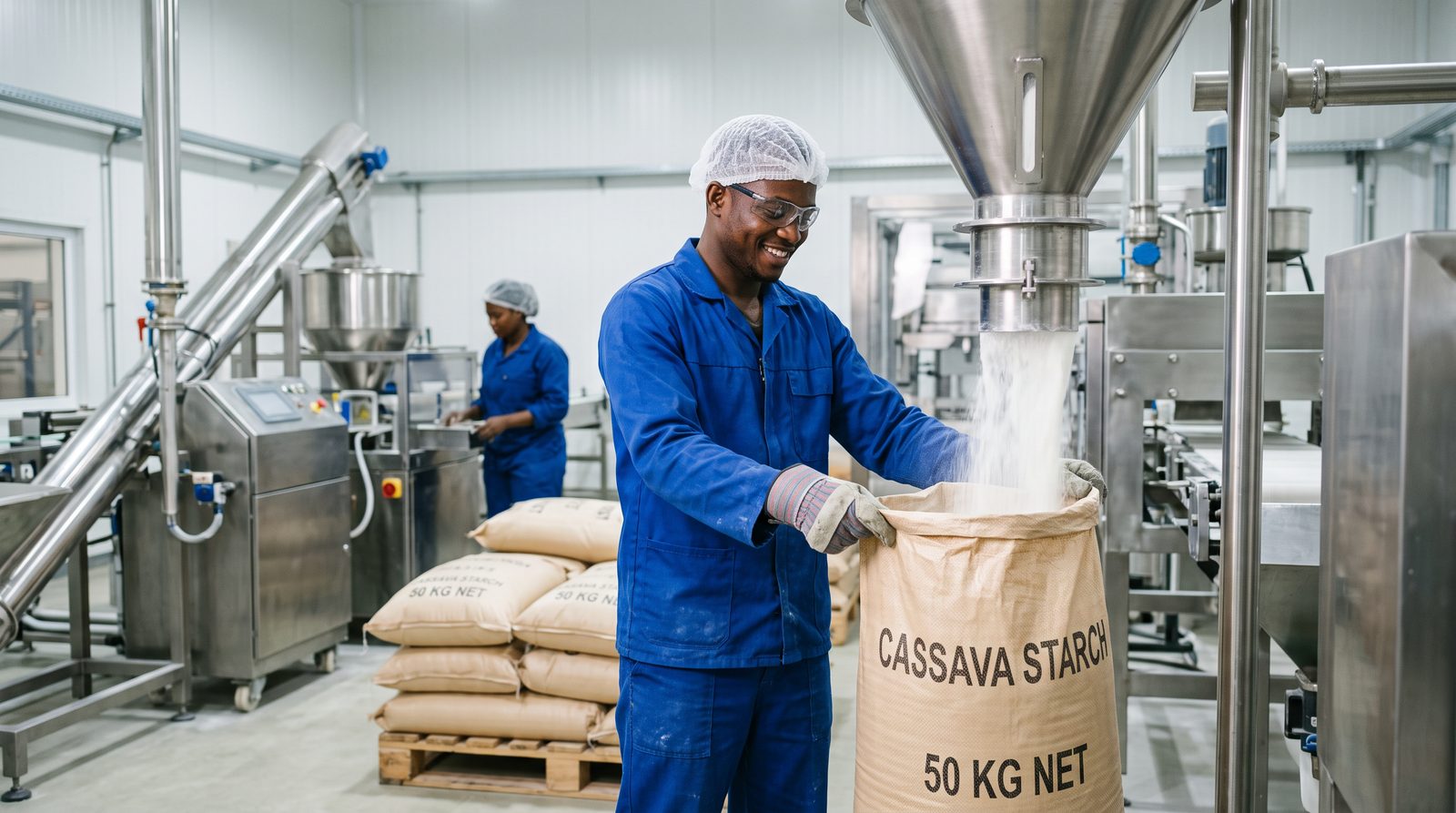
Each batch is tested against ISO 22000 and HACCP standards, bagged in 25 kg and 50 kg B2B sacks, and dispatched with full plot-to-bag traceability.
Concept imagery · The processing line at target scale · co-products (peels & fibre) fuel the biomass boiler
Cassava’s 9–12 month maturity dictates the critical path: farming begins 12 months before the plant is commissioned.
Quality from day one: ISO 22000 and HACCP implemented from construction, an in-house laboratory testing every batch, and full digital traceability from outgrower plot to dispatched bag.

Concept imagery · In-house QC laboratory — every batch tested, ISO 22000 & HACCP from day one
This page tells the operational story. The complete figures are reserved for qualified investors and shared under NDA.
A complete investment memorandum covering the cassava anchor from agronomy to exit — prepared July 2026 and maintained as the project advances.
Request the business planWe are engaging governments, development finance institutions, and strategic partners. Request the business plan and arrange a site conversation.
Request the investor brief info@denzellogistics.com